Maine Coon cats are known for their MAJESTIC size and FRIENDLY nature. So, what do these amazing felines love to munch on? 🍽️ In this article, we’ll unveil the secrets of their diet and how it impacts their health and nutrition.
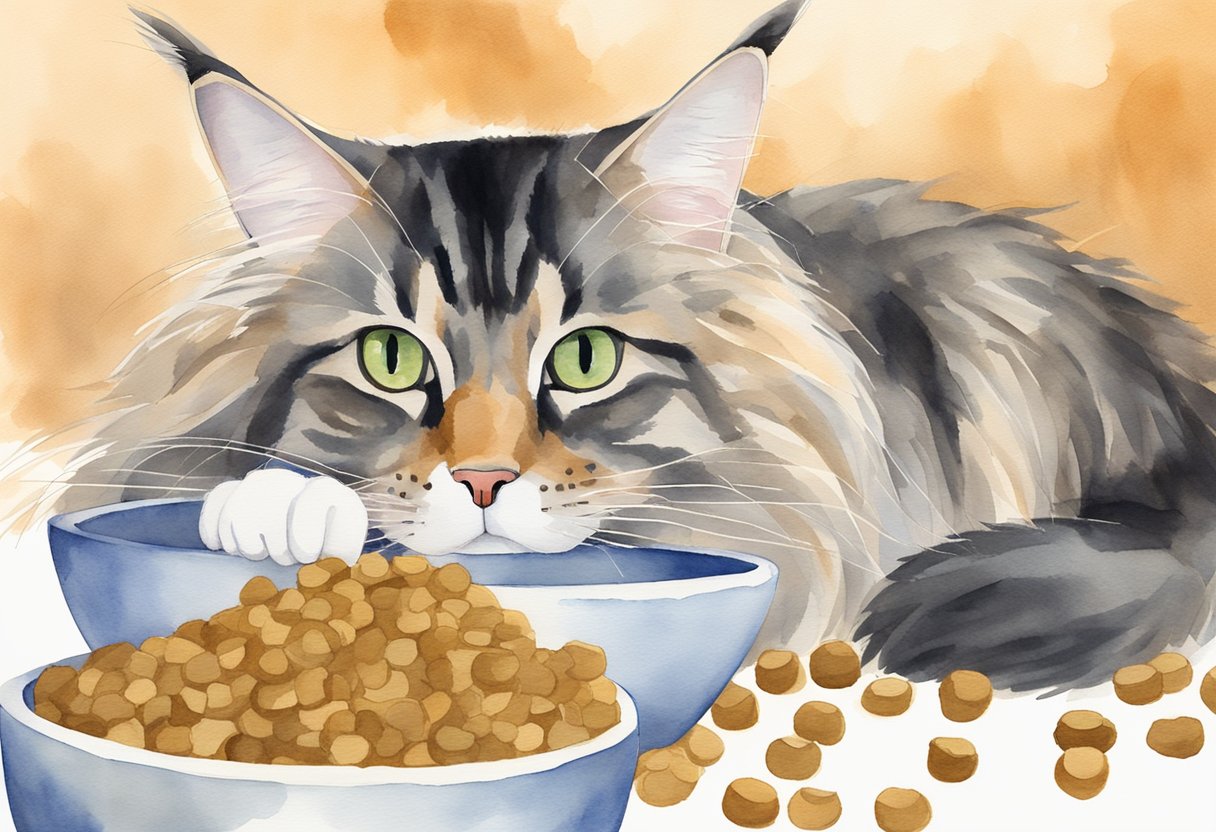
Your Maine Coon’s diet should be RICH in animal protein, as they are true CARNIVORES at heart. 🥩 Foods like fish, chicken, and turkey liver can provide the essential nutrients they need to live HAPPY, healthy lives. But that’s not all there is to know about their culinary preferences!
Keep reading to discover more about their unique dietary needs, and learn how you can ensure your Maine Coon cat THRIVES. In the end, you’ll become the ultimate nutrition expert for your giant feline friend! 🐱💪
The Maine Coon Diet Deconstructed
Protein Power for the Prowling Puss
Chicken and fish 🐟 play a crucial role in your lovely Maine Coon’s diet. After all, they need plenty of animal proteins to maintain their majestic fluff! But why stop there? Mixing it up with other sources like taurine is essential for sharp vision and a healthy heart. 😻
- Chicken: A lean source of protein for your prowling puss
- Fish: Rich in Omega-3 fatty acids, enhances your kitty’s coat
- Taurine: An essential nutrient to prevent blindness and heart problems
Fatty Acids: The Good, The Bad, and the Fluffy
Don’t be fooled by the word fat! Your Maine Coon cat actually needs a balanced amount of fatty acids. The trick is distinguishing the good from the bad. Aim for Omega-3, Omega-6, and stay clear of trans fats.
📋 Notable Fatty Acids:
- Omega-3 Fatty Acids: Boosts immune system and coat quality
- Omega-6 Fatty Acids: Supports growth, reproduction, and metabolism
Vitamins and Minerals: The Feline Fountain of Youth
Who doesn’t want their Maine Coon to stay playful for years? A diet rich in vitamins and minerals will make that dream come true! 💫 Look for cat food with essential nutrients to promote a healthy immune system, along with a gorgeous coat.
🔑 Key Nutrients:
- Vitamin A: For vision and immune function
- Vitamin D: Regulates calcium and phosphorus for strong bones and teeth
Carbohydrates: Navigating the Maze
Your Maine Coon enjoys a little treasure hunt while snacking. Though they may struggle with some carbohydrates, finding the right balance is a real game changer. By incorporating complex carbs and avoiding simple sugars, you’ll see a world of difference in your cat’s energy levels.
🌾 Smart Carbs:
- Brown rice: A good source of energy that’s low in fat
- Quinoa: High in protein and nutrients, gluten-free
With these dietary guidelines in mind, your Maine Coon will shimmer with health and lead a happy, vibrant life! 🌈
Maine Coon Munchies: Wet Food vs. Dry Debate
The Scoop on Wet Food
Hydration is key for Maine Coon Cats 🐾! Wet cat food brings the advantage of keeping your cat well-hydrated. Also, it often contains fewer carbs, so it meets the specific dietary needs of these feline companions. Wet food can mimic their natural, prey-based diet.
However, wet food can be pricey 💸. If you’re on a budget, remember that mixing wet and dry food together can help strike that perfect balance.
The Crunch of Dry Food
Dry cat food offers a different take on nourishment. It’s convenient, easy to handle, and generally more affordable. It’s important to focus on quality, high-protein options like Blue Buffalo’s High Protein Food. The crunchiness promotes dental health, so smile on 😺!
One downside is the potential high carb content in some brands, so watch out for that! Your cat’s health comes first, so aim for a 6% or lower carb content in dry food.
Remember, you know your Maine Coon best! Experiment with wet and dry food, or combine the two, to find the perfect mealtime combination for your feline friend. Happy feeding! 🍽️
Feeding Your Furry Giant: Portion Size and Frequency
Kitten Chow Time
Congrats🎉! Your furry Maine Coon kitten has joined the family. Now it’s YOUR responsibility to feed them the right portions and at the proper frequency. So, what’s the right portion size❓
Maine Coon kittens require 2-4 meals per day. Consult your vet for specific portion sizes depending on their age and weight. Remember: Growth spurts demand extra nutrition! 🍴
Adult Cat Feast Frequency
Adult Maine Coon cats need their fair share of chow too. To avoid them overeating, maintain a healthy feeding schedule. For a 10-pound Maine Coon, aim for 3 meals, each with around 😋100 calorie portions.
Here’s THE plan:
- Breakfast: 🌞 Serve it when you have YOURS.
- Lunch: 🕐 Early afternoon should do.
- Dinner: 🌙 Evening, around YOUR dinner time.
Portion control is 🔑 for your adult giant Maine Coon.
Senior Snack Schedules
Your Maine Coon’s nutritional needs change as they get older.
| Life Stage | Meals |
|---|---|
| Kitten | 3 to 4 |
| Adult | 3 |
| Senior | 2 to 3 |
TIP💡: Consult with your vet for specific senior snack schedules.
Always remember: Age gracefully, snack responsibly! 🐾
Tailored Tastes: Special Diets and Sensitivities
Picky Eaters: Texture and Taste Preferences
Maine Coon cats can be picky eaters at times. 🐱 Some prefer wet food, while others love dry food and crunchy kibble. To keep your furry friend happy, try experimenting with different cat food textures. Vary their diet by including both wet and dry options, allowing them to choose their favorites. 😻
Dietary Ouchies: Allergies and Intolerances
Allergies and intolerances can be common in Maine Coon cats. 😿 Protein-based allergens like chicken or fish are a potential concern. To avoid discomfort, monitor your cat for signs of itching, vomiting, or diarrhea after trying new foods. Rotate protein sources and try novel proteins like venison or rabbit to minimize potential issues. You can also consult your veterinarian for guidance in selecting appropriate food for sensitive cats. 🐈⬛
Condition-Specific Cuisine
- Specific Dietary Needs: Maine Coon cats require a balanced diet, with high protein to support their large size and strong muscles. 🦾 Opt for cat food with a high protein content, and consider supplements like taurine and arginine to support their unique needs.
- Healthy Weight & Obesity: A sedentary lifestyle or over-feeding can lead to obesity in Maine Coon cats, increasing the risk of diabetes and heart conditions. 😔 Keep your cat at a healthy weight by providing exercise and portion control. Discuss with your veterinarian the right amount and type of food to suit your cat’s individual needs. 💪
- Diabetes: If your Maine Coon develops diabetes, you’ll need to adjust their diet to manage blood sugar levels. Opt for low carbohydrate, high protein cat food and work with your veterinarian to create a personalized meal plan for optimal health. 🍱
The Hunt for Health: Natural Instincts and Diet
Wild at Heart: Raw and Homemade Options
As a Maine Coon cat owner, you might want to explore the raw food diet. This diet mimics what your furry friend would naturally consume in the wild, such as mice and birds. Providing homemade cat food can also be a great way to meet the specific nutritional needs of your Maine Coon cat. 😺 For instance, offering a high-protein diet comprising fish, chicken, or other meat is important to their overall health source.
The Indoor Jungle: Simulating the Hunt
To keep the hunting instincts of your indoor Maine Coon cat sharp, it is essential to engage them in regular exercise and playtime activities. 👍 REPLICATE a stimulating environment inside your home by using toys such as feathers and laser pointers, which mimic their natural prey. In addition to mental stimulation, these games provide them with the hunting experience, addressing their primal urge to stalk and capture prey source.
Remember, keeping your Maine Coon cat healthy and happy involves both a nutritious diet and engaging playtime. So go ahead, unleash their wild side, and make their indoor jungle a purr-fectly thrilling experience! 🐾
What not to Feed: The Never-Ever Edibles
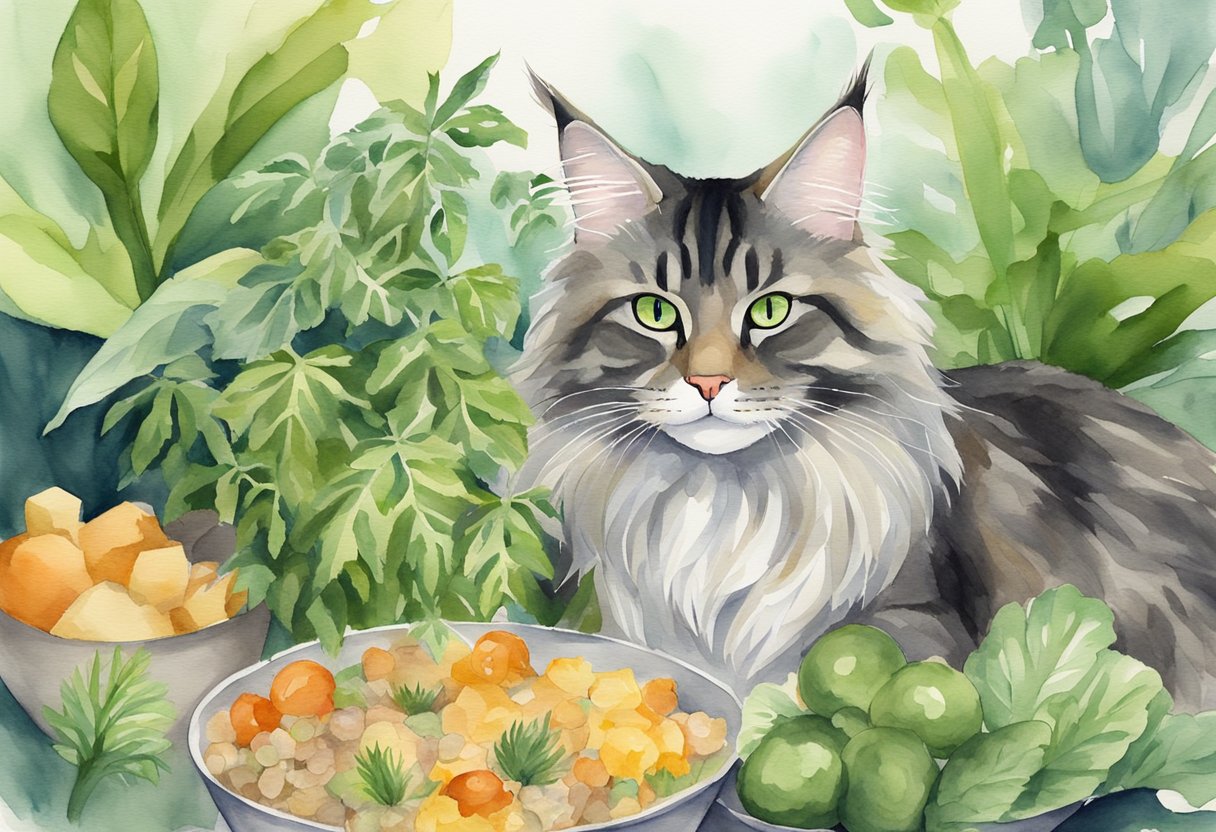
Toxic Treats: Foods to Avoid
Chocolate is a no-go 🚫 for Maine Coon cats. The chemicals found in chocolate, theobromine and caffeine, are harmful to cats and can even lead to fatal consequences.
Alcohol should never be given to your furry friend. Even a tiny amount can cause severe health issues and may even be fatal.
Grapes and raisins appear harmless, but these sweet fruits are TOXIC to cats. Acute kidney failure can occur, even with small portions.
Dangerous Delicacies: Common Household Hazards
Onions and garlic are bad news for your Maine Coon 🐱, as they contain compounds that break down red blood cells, potentially leading to anemia.
As you take care of your cat’s dietary needs, it’s tempting to provide TREATS. However, ensure these are specifically designed CAT TREATS. Human treats can cause gastrointestinal problems and other health issues. Keep your Maine Coon’s diet well-rounded and avoid these never-ever edibles to ensure a happy and healthy companion!
Consulting the Feline Gurus: Vet Visits and Nutrition Advice
Your Maine Coon buddy deserves the BEST nutrition possible, so it’s essential to consult the experts: your veterinarian and a feline nutritionist. Don’t worry; we’ve got your back. 😺
Vet-Approved Feasts
Visiting your favorite vet is the first step in determining the optimal diet for your Maine Coon cat. Remember, you’re a cool cat parent, and your furball deserves only the best in health! 💪 Vets will advise on crucial dietary elements:
- A diet with essential nutrients: proteins, carbohydrates, fats & fatty acids, amino acids, vitamins & minerals 1.
- A balanced diet that caters to your Maine Coon’s size, age, and activity level.
Get that unparalleled support for your feline friend’s growth, muscle development, and overall health! 🏋️♀️
Partnering With a Feline Nutritionist
To add some pizzazz to your Maine Coon’s mealtime, consider teaming up with a feline nutritionist! 🍽️ Nutritionists can whip up:
- Tailor-made diets to suit your cat’s unique needs.
- Food containing both wet and dry options, giving your cat both crunchiness and hydration 2.
So there you have it, a fool-proof plan to ensure your Maine Coon’s diet is nothing short of purrfection! 🐾